Book Connie To Speak
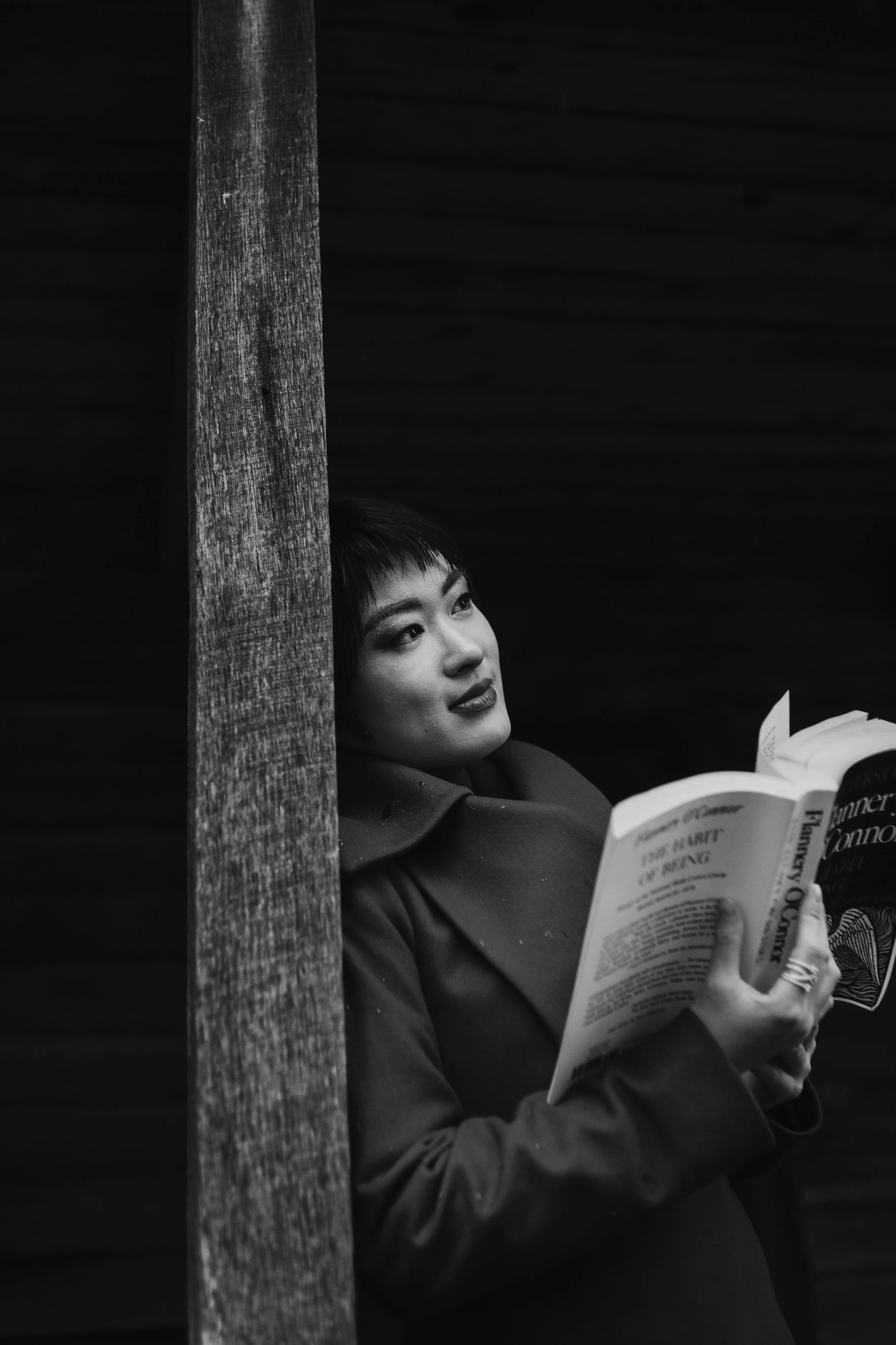
Connie Chen is a writer and public theologian whose work reaches over 280K followers across social platforms. She offers a variety of workshops for nonprofits, faith communities, and clinicians about disability and ableism, queer and feminist theology, religious trauma, and the intersection of faith, sexuality, and shame.
Workshops
Custom workshops available upon request.
-
What happens when God doesn't heal you? This workshop names the specific ways churches exclude disabled people, physically, theologically, and relationally, and gives leaders and staff concrete reframes and practices to build genuine accessibility and belonging, not just accommodation. "Disability affirming" frameworks still ask disabled people to fit inside an unchanged theological structure. This talk explores what theology looks like when it's built from a disabled perspective, to worship a disabled God.
-
What happens after you plant the pride flag and invite queer folks in? Designed for faith leaders and organizations ready to move past tolerance toward a genuinely new theological imagination, this talk explores God through the lens of queerness. What can we learn from a queer God?
-
While pastors refrain from naming sex at the pulpit, 67% of pastors, 75% of Christian men, 40% of Christian women report porn use, and sit in private shame of their desire. This workshop rethinks purity culture's legacy and equips attendees with a framework to rebuild a relationship with the self that exists outside of the shame architecture.
Customizable by request: kink as a theological category, a close reading of Song of Songs as erotica, or reimagining God from scientific research on the clitoris, vagina, prostate, orgasm. The goal across all of these: restoring erotic knowledge to people who learned to consistently and ritually interrupt the natural interest and excitement of their bodies.
-
Most workplaces treat disability inclusion as a compliance checklist: ramps, accommodations, ADA forms, without addressing the deeper culture that determines whether disabled employees actually belong. This workshop moves beyond accommodation to ask a harder question: does your team make space for disabled employees to participate fully, or just space for them to be present? Drawing on her work examining how institutions exclude disabled people physically, structurally, and relationally, Connie gives managers and teams concrete tools to recognize ableist assumptions baked into "normal" workplace culture, from how meetings run to how performance gets evaluated, and equips them to build a workplace where accessibility is the baseline, not the accommodation.
-
Most religious inclusion training treats the workplace challenge as one of difference: Christian, Muslim, Jewish, secular employees learning to coexist. But the harder, less-named challenge is injury. Many employees aren't neutral about religion; they're carrying real harm from it, and that shapes how they respond to anything faith-coded at work, from a coworker's cross necklace to a "blessed" Slack message to a mandatory gratitude practice at an offsite. Well-meaning inclusion efforts can misfire badly when they don't account for this, repeating, even unintentionally, the coercive dynamics someone left a religious system to escape. Drawing on her work studying how shame and harm operate inside belief systems, Connie gives managers and teams a framework for building workplaces that can hold both sincere belief and religious injury at once: how to recognize trauma responses (over-compliance, distrust of authority, hypervigilance) that get mistaken for personality or performance issues, how to support employees across faiths and none without defaulting to either forced neutrality or spiritual language that can retraumatize, and how to create genuine safety for people on every side of religion's impact on their lives.
-
We treat writing as a skill to perfect or a product to publish, rarely as a spiritual discipline in its own right. This workshop reframes writing as a practice of attention: a way to sit with the self honestly, to listen for what's true before it's polished, and to encounter something larger than the ego that's trying to sound impressive. Drawing on her own writing and mentorship practice, Connie guides participants through writing as embodied theology, a way of meeting God, grief, desire, or doubt on the page when no other language is available yet. Designed for retreat centers, writing programs, and faith communities looking for a creative practice that doubles as genuine spiritual formation, not just a workshop, but a way back into the body and the sentence at the same time.
-
We don't go to couple's therapy with God. The cage that people call God is often not in the room, but its fingerprints are everywhere: in the client who can't say no without panic, in the one who dissociates during sex, in the one who apologizes before they've finished a sentence. Most clinicians have no specific training in religious trauma, even though it shows up constantly in clients with high-control or purity-culture backgrounds, and generic trauma frameworks miss what's distinct about it: the trauma isn't a single event but an entire architecture of belief, and the abuser is often unnamed, untouchable, or beloved by the rest of the client's family. This workshop gives clinicians language and a working framework for recognizing religious trauma as its own category, naming the specific patterns it produces in the body and in relationships, and treating it without requiring the client to resolve their theology first.